Ron’s #44: Steve Jobs by Walter Isaacson

Mark's excellent review is here.

I finished the last few pages of this biography in the following environment: My Apple TV played Cars streamed from my Mac that I controlled with my iPhone. All that was missing was an afternoon trip to an Apple Store somewhere. This illustrates not my dependence on technology (a topic that was addressed several other times in my reviews), but on the influence Steve Jobs has in my life. In many ways, Apple’s history is my history. Since I’m only a little older than Apple, I can connect aspects of my life with its.

I bought my first Mac in 1998 and lived in an Apple-exclusive home every since. The history of Apple and the computer industry has been a favorite topic of study over the years, and I’ve read and watched many books and movies. I have been an Apple enthusiast/evangelist for over a decade. I, like many, fell into Steve’s charismatic spell. Because of this, reading the new biography about Steve Jobs was not an option; it was an edict from within. The author, Walter Isaacson, chronicled the lives of Benjamin Franklin, Albert Einstein, and now, Steve Jobs.

Steve Jobs was a many of contradictions.

He was a billionaire, and he was a Zen Buddhist. He created beautiful products, but he lived as a minimalist. He was a charismatic man, but he was a complete jerk everyone around him. He talked about passion in life, but he largely ignored his family. He believed in design and beauty, but he ignored a Creator or Architect. He believed in eschewing the trappings of the world, but he created the prettiest ones.

Isaacson gives a multi-faceted picture of the man who popularized geek, both the good and the ugly. And there is lots of ugly. The book is fast-paced and thoroughly enjoyable, even if you were not interested in computer history. Steve Jobs is as tormented of a man as any character is a Dostoevsky novel. He wants to build great things, but he gets in his own way. He died with few close friends, but changed the technology world for the good. On one side he inspired engineers and designers under his leadership to create products that couldn’t be done, but he did this with berating, insulting, and, at times, crying. Most leaders use encouraging phrases like “Good job!” and “Impressive!” to help build up employees. Steve Jobs’s favorite line when he is shown a new design or feature is, “This is shit!” To Steve, this isn’t an insult; rather, it is a motivational tool.

What makes this book rich and deep is not just the computer history narrative, but it is also the subplots that run through the story: adoption, Steve’s estranged daughter that he denied for years, his romantic life, Bob Dylan, and Steve’s cancer. These secondary stories make Jobs more human and relatable to use non-billionaire geniuses.

While I learned much more about Apple, the one aspect that I was more surprised to discover is how much Steve Jobs really did at Apple, even in the final days. He micromanaged design, usability, packaging, commercials, color of walls, construction of new buildings and campuses, tile in Apple stores, the “floating” staircase in the stores, and even the dinner menu at events. Before I read the book, I thought that Apple would continue just fine without him. Now, after reading how he made all the decisions, I’m not so sure.

There’s so much more I want to say in praise of this book and for Steve Jobs and Apple, but I’ll save those for conversations with my geeky friends. I wish I could have it with Steve himself. Steve Jobs was one man I wanted to have dinner with someday. (Sidenote: I did have coffee with Apple’s other co-founder, Steve Wozniak. It was a great conversation with a slightly odd fellow. Read about it here). I’d love to talk about how his quest for design, order, and beauty springs from something within us, something built by an ultimate Designer. There was an interesting spiritual comment from Jobs as Yo-Yo Ma was playing his cello for an event. “You playing is the best argument I’ve ever heard for the existence of God, because I don’t really believe a human alone can do this.” After this, Jobs made Yo-Yo Ma commit to playing the cello at his funeral. Fittingly, I am listening to Ma’s Bach Cello Suites as I type this.

I know what Steve Jobs would say about this review for his biography if he were to read it:

“This is shit.”

JRF's #41 - Stop Loving the World by William Greenhill

To continue with the Puritan theme from last post, here is a great little book based on a sermon series by 17th century preacher William Greenhill.  In six short chapters, Greenhill expounds on the important but often misunderstood and ignored command of I John 2:15: "Do not love the world or the things in the world.If anyone loves the world, the love of the Father is not in him."

I commend this book as a tool for God to both wound, heal, and redirect your heart from being enraptured by corrupted creation to being overwhelmed by the Incorruptible Creator.

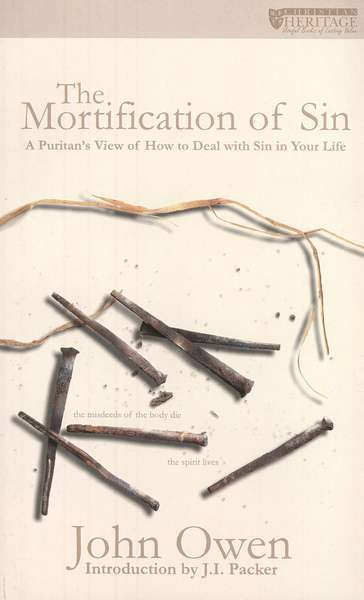
JRF's #40 - The Mortification of Sin by John Owen

I, along with the editors of this book, agree with J.I. Packer's assessment of John Owen's writings:

"I did not say that is was easy to read them! - that would not be true; yet I do venture to say that the labour involved in plodding through these ill-arranged and tediously-written treatises will find them abundantly worthwhile."

This book was hard to read, hard to understand, and even harder to apply.  But it is a gift to all who seek to take their sin as seriously as God does and to join Him in waging war against the enemy of our souls.  Owen has an uncanny ability to expose the darkness of the sinful heart and strip away all the masks we are so prone to try  cover our soul-disease with.  It is true that this book took me a long time to read due to it's old English style.  It is equally true however, that it took me many months to read due to the many times I had to step away from it to recover from the piercing convictions it brought about in my heart.  Many times I felt like Owen had been watching me the previous day and then wrote the chapter I was reading specifically for me.

This book will help you feel the seriousness of your sin.  And this is a good thing.  As Piper states in the Forward: "by making life easier for ourselves in minimizing the nature and seriousness of our sin, we become great victims of it...What Owen offers is not quick relief, but long-term, deep growth in grace that can make strong, healthy trees where there was once a fragile sapling."

The version I read came out of the below collection, which I recommend as it has some helpful footnotes added by the editors to help you push through some of the difficult passages and wording.  I was hoping to read the entire anthology this year, but that ain't gonna happen:


"The saints, whose souls breathe after deliverance from sin's perplexing rebellion, know there is no safety against it but in a constant warfare."

"But now if a man be so under the power of his lust that he has nothing but law to oppose it with, if he cannot fight against it with Gospel weapons, but deals with it altogether with hell and judgement, which are the proper arms of the law, it is most evident that sin has possessed itself of his will and affections to a very great prevelancy and conquest...What Gospel principles do not, legal motives cannot do."

JRF's #38 - Vintage Jesus by Mark Driscoll and Gerry Breshears

Our community group read through this book together over the last few months.  I had previously read it when it was first published and had enjoyed it, so I was looking forward to reviewing it with the group.  Overall I would say the experience was good.  The simple truths about Jesus’ nature, message, work, and impact are explored and explained in blunt Driscoll style.  It was refreshing to meditate on the uniqueness and glory of the God/Man.  In addition it was thrilling to see some in the group discover different truths, perspectives and implications about Christ for the first time.

I used to be one of those guys who would rush to Driscoll’s defense whenever his unorthodox methodology was under attack (which is often).  I find myself compelled to defend Driscoll less and less these days.

When I read Vintage Jesus as a young youth pastor, I delighted in the funny and shocking stories Driscoll uses to illustrate his points ("the kids will think I’m cool when I use this one!").  I won’t go into detail describing these illustrations, that would make me guilty of the same borderline filthy talk that I am accusing him of.  Suffice it to say that I believe his points could have been made without the explicit details of child sexual abuse, MTV, details of the contents of supermarket magazine racks, and postulations about Jesus farting with his disciples.  I know that Driscoll would (and has) said that he is just trying to make the timeless truths of Scripture relevant to the wicked culture in which we live, however the longer I walk with the Lord, the more I see that the purpose of God’s condescending revelation of Himself is not to drag Him down to our level but to call us up to His.  The ultimate purpose of the incarnation was not for Christ to become more like us, or even more palpable to us, it was for Him to make a way for us to know Him, be known by Him and be conformed to His likeness.  The revelation of Christ’s light shows us the depth of our darkness and displays the true relevance and irrelevance of all else.  Driscoll seems to be trying to illustrate the brightness of Christ’s light by detailing more of our darkness – effective up to a point but ultimately counterproductive in my opinion.  For example, to end the book with a reference to Sean “Puffy” Combs instead of exalting the glorious Risen Christ about whom this book is about is a dumb distraction at best.

Perhaps the reason Driscoll's crassness so clearly bothered me this time around is that "coarse jesting" is a sin with which I am increasingly being convicted of in my own life.

With that rather large caveat (which could probably be applied to most of Driscoll's ministry, although he has seemed to tone things down the older he gets) I would recommend this book to you for the purpose of expanding your understanding and awe of the person and work of the One King to whom every knee will eventually bow.

Ron’s #43: Bringing Up Boys by James Dobson

Wanting to read a book that explicitly discusses the need for raising boys, I first thought of this volume. I know that raising a boy has specific challenges than raising girls because—gasp!—boys and girls are different. Contrary to what society has to say on the matter, there are differences in gender. Along with these differences come the different needs for these children. James Dobson addresses some of them well.

The part of the book I enjoyed the most is the need for boys to have a father. On many television shows and movies, the father is the dork or imbecile compared to the wise, all-knowing mother. This picture damages what the role of a man is in boys’ eyes. Dobson points out that a boy needs a father in order to grow up as a healthy man in society. With the many fatherless families in America, this results in a problem for all of society, but especially for that boy.

This book reminded me not only what my son needs, but also of what I need to give. He watches me and will become the man that I am. He will treat his wife the way I treat mine, he will talk the way I talk, and he will lead his family spiritually the way I lead mine, and he will trust Christ and pray the way I do. This is a tall order, one that I need grace for daily.