Ron’s #35: Coffee Shop Conversations by Dale & Jonalyn Fincher

Coffee Shop Conversations: Making the Most of Spiritual Small Talk was a free offering in the Kindle Store for a short time. It was worth every penny I paid for it.

I enjoyed the premise of this book a great deal: People have a desire to talk about spiritual matters, so find ways to discuss them to bring a positive view of Jesus to the conversations. I think this is important in our evangelism. Often times, we are the ones who offend our friends and family, not the message of the Gospel.

“When our categories become more important than the people in the categories, we have become thoroughly modern adults who know how to justify our distance from our neighbor.”

“If we are eager to talk about Jesus’ sacrifice, we need to show them our own willingness to love them with sacrifice. We may find ourselves welcomed into someone else’s life when we lay down our sword of ridicule. Mocking others, even behind their backs, destroys our capacity to respect them when we speak face to face.”

“We’ve learned to bring up Jesus first and not our denomination, church’s name, or even the word Christian. Labels have baggage. We don’t want to be too quick to slap a label on others because we want to know them individually.”

I was reminded what I learned from Greg Koukl’s excellent book, Tactics, and it was indeed a good reminder. However, there was much to get in the way of the message in this book to make me not recommend this. I will list three of them.

The first is the writing style. One of my biggest annoyances is when two people co-author a book, and they both take part in telling the story. The Finchers go further in this by putting their name in parentheses whenever the person telling it switches. Annoying and distracting. It continued throughout, and I never got used to it. It seems amateurish.

The other was Jonalyn’s harping on egalitarianism (the philosophy that there are no distinct male/female roles in the biblical text. This is contrary to complementarianism, where male/female have different roles, but are equal in standing before God). She would offer mini-diatribes about it as though it was part of another book, but she was trying to cram it in here regardless if it were germane to the discussion or not. While I disagree with egalitarianism’s interpretation of key texts, I respect those who hold it and can articulate it well. Jonalyn is not one of those who can. Rather, it felt preachy and simple. In fact, my problem with this second point complements (pun intended!) my first criticism with the book. Jonalyn tries so hard to fight her way into equality that she not only needs to insert her name whenever she can, she also overshadows Dale’s stories. Ironically, her egalitarianism gave her a higher and more important role than her husband has in the book. Dale’s contributions are secondary to the story, and feel incidental to Jonalyn’s preaching.

To round out my criticism with the book is that while I love her focus on having important spiritual conversations, she seems to not have as high a view of Scripture as she has on conversations, whether about homosexuality or other world religions. Like the Finchers, I want to have important conversations about Jesus with those around me. However, I want to do that because of my love of Jesus, my love of others, and because of his love for them. All these reasons are grounded in the Bible itself. We are to be people of the Book, even those parts that we don’t like or understand completely.

If you are looking for a way to talk to others well and to encourage conversations on spiritual matters, skip this book and pick up Greg Koukl’s Tactics.

 

Mark's #42 - Those Guys Have All The Fun: Inside the World of ESPN by James Miller and Tom Shales

I'm a huge fan of ESPN... or so I thought.  After 450 pages of reading this book I gave up... and I wasn't even close to finishing the book (It's 750+ pages).

I'm wondering what the authors were thinking writing such a massive book on a sports television network.   You have to be a sports nut to really enjoy this book... but if you're that much of a sports nut, then you're probably not reading ANY books, not to mention a 750+ page book.  You wouldn't have time, you'd be watching Sportscenter.

I did enjoy the occasional walk down memory lane of my childhood as various ESPN announcers would share about certain events in the world of sports and how ESPN interacted with those events.

However, this book was way too much in the weeds... Perhaps a better title for the book would be, Those Guys Are Way too In To Themselves.

I like books about sports history... this book though, is more of a very detailed inside look at various executives and personalities making decisions, backstabbing, cursing, planning, and producing the network that became "The Worldwide Leader In Sports".

I'd rather just watch Sportcenter....

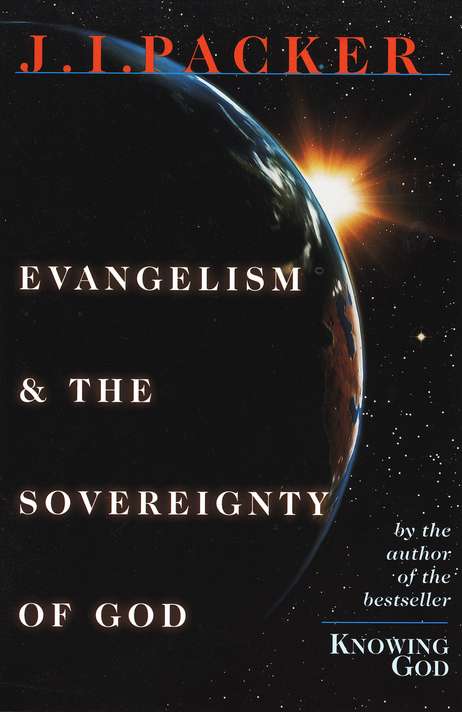
Mark's #41 - Evangelism and The Sovereignty of God by J.I. Packer

If you're a follower of Christ and you only read one book this year, it should be this book.  By far this book is the best book I've read in respect to the biblical mandate to evangelize.  This book is a thoughtful, clear, biblically sound look at how the doctrines of God's sovereignty and man's responsibility work together in respect to the advancement of the gospel. This relatively short book is divided into four main sections:

  1. Divine Sovereignty - Here Packer shows that regardless of what a Christian may say they believe about the doctrine of divine sovereignty, all true Christians believe in it. In prayer, we are acknowledging our helplessness and God's sovereignty.  We give thanks to God for our salvation, not to ourselves. We pray for the salvation of others. etc...
  2. Divine Sovereignty and Human Freedom - Packer calls these these an antinomy - an apparent contradiction; two truths standing side-by-side that both have cogent reasons for believing them.  The Bible teaches both of these, and we should not put the two in opposition to one another, because the Bible doesn't.  We have to recognize that our minds and our reasoning is finite and that our ways are not God's ways. The only way to handle an antinomy is to accept it and learn to live with it.
  3. Evangelism - Here Packer explains what evangelism and the gospel are and are not. For one to evangelize, one must faithfully teach and apply the truth of the gospel message.  There is no one single mode of evangelism, but a variety of way in which this can and should be done (i.e., personal evangelism with friends, family, co-workers, regular church services, Bible studies, etc.).
  4. Divine Sovereignty and Evangelism - In conclusion, Packer shows once again, that these are not in contradiction, but rather it is the sovereignty of God that is our ground and hope in evangelism.  When we share the gospel with people and the offer of salvation, they have a real choice they will need to make and be accountable to.  Likewise, as Christians, we too will be held accountable for our faithfulness in obeying the command to evangelize.  Nevertheless, God is sovereign over the ends as well as the means of salvation.   Successful evangelism without God's sovereign grace is impossible.


A couple of months ago I read an article about one of my favorite pastors and teachers: John Piper.  In the article, Piper was asked what would he do differently after 40+ years of ministry.  His answer: He would pray more and he would do more personal evangelism.  I've tried to take that advice to heart.  This book is certainly and encouragement to that end.

Mark's #40 - One Thing You Can't Do In Heaven by Mark Cahill

Mark Cahill is passionate and excited about telling people, anywhere and everywhere, about the good news of Jesus Christ. As a speaker, author, and personal evangelist, he has taken Christ's command to "go make disciples" very seriously and joyfully.   This is a book that is meant to be an encouragement to other Christians to do the same.  The strength of this book is in the authors passion and many stories from his own experience in sharing the gospel.

I want to be very careful in any kind of critique of a book on evangelism, especially one so heavily focused on the experiences of the author actually doing the work of an evangelist.  As D.L. Moody once said to a gentleman who criticized his street preaching evangelism, "what I'm doing to share the gospel beats what you're not doing" (or something like that).   I pray that God would give me the boldness and passion He has given Mark Cahill.   He clearly wants people to go to heaven and not to hell, and he's doing something about it!

However, I do have a few concerns with the book.  The writing is a bit too stream-of-consciousness and not well organized.  The author often slips into guilt or even poor theology as motivation for evangelism.  For example, Cahill writes, "Jesus did His part two thousand years ago, and now it is time for you to do yours."  At other times I felt that Cahill's apologetic responses were not well grounded or good arguments (for example, one of his 'proofs'  for the Bible being God's Word is that it's the best selling book in history).

The overall thrust and motivation for evangelism is, for Cahill, to get people out of hell and into heaven... But what about God? You get reconciled to God when you embrace the gospel! Yes you get heaven and avoid hell, but even these are secondary motivations... "God is the Gospel" -John Piper.

Again, let me say I respect and appreciate the work and passion of Mark Cahill.  I would simply encourage him to spend some time growing deeper in his understanding of theology, apologetics, and writing ability.

Brad's nos. 6 & 7 - The Drawing of the Three and The Wastelands (Dark Tower Series 2&3) by Stephen King

Time to catch up. I am woefully behind on my posts; therefore I am taking some time off of my vacation at Disneyland to post some reviews from books I read in January. I really enjoy world-building fantasy series (ie: LOTR, Chronic-what-cles of Narnia, Harry Potter) but am leary of the fantasy genre as a whole. Though I have never read any Stephen King, I heard that his Dark Tower series was amazing. I looked into it a bit and read that his original idea for the series was to blend together a Tolkien style fantasy with a Leone style Spaghetti-Western. I was sold. I read the first book and concluded what most seem to: it showed great promise but was lacking polish (it was one of King's first books). I quickly grabbed up the next two books in the series hoping for a continuation of his original premise. What I got was quite a departure from my expectations derived from the first book. The Drawing of the Three has our hero Roland (the last member of a group of six-shooter totin' knights called "Gunslingers")traveling through magic doorways found on the beach into the heads (think Being John Malchovich) of three different people living in late 20th century New York. Though not the fantasy/western setting I envisioned, I found it both compellingly written and quirky. I enjoyed it quite a lot. With my expectations for the series both heightened and broadened, I greedily dove into book three.

Despite a return the the fantasy world, this book marked the end of my journey in the Dark Tower series. I felt that book three was very inconsistent in tone, genre, and characterization. Though full of action, it was strangely boring, like a Brett Ratner movie: numerous individual "cool" scenes smashed together with little regard to thematic or character continuity. I finished the book solely out of duty and have no desire to ready any other Stephen King books.

Ron’s #34: Born to Run by Christopher McDougall

Born to Run by Christopher McDougall is one of the best books I’ve read this year, and I’m not even a real runner. My friend recommended this book to me two years ago, and told me that it was a story of a tribe of excellent runners in Mexico. I thought it sounded interesting, but never rushed to read it. When I was in the States this summer, Born to Run came up again and again in airports, bookstores, and my conversations. I thought it was time to read it, and I’m so glad I did.

My friend was right that there is a tribe of super-runners in the book, but that is far from the whole story. The frame story of the book is the author’s experience with runner. The book begins with his visits to several doctors to find treatment for his many running injuries. He is told many times that running is bad for us, and that we all are injured. His only solution, he was told, is to quit running or get a few cortisone shots to relieve the pain. McDougall was not ready to give up on his sport, so he began a search to run better.

Throughout the book we meet the Tarahumara runners from Mexico, a cast of characters involved in ultra-running (any race more than a regular 26.2-mile run, usually 50 to 100 miles), and the strange, elusive Caballo Blanco, a white man from Colorado who lives among the Tarahumara. Much of the story is the background on the runners: Barefoot Ted is a character too wildly obnoxious to be a real man; Billy and Jen the surfer/runners, and Scott Carrier, the vegetarian super-runner from Seattle. Caballo attempts to bring all of these superathletes together for a 50-mile race in Tarahumara country.

Born to Run is even more than a fascinating story of an impossible race with superheroes. As McDougall continues to find out how to run better, he offers a history of running, running shoes, and the Nike marketing machine. Along the way, he preaches on the benefits of barefoot running, and how modern running shoes actually cause us injury. You’ve no doubtedly have seen those silly Vibram Five Finger shoes. Those skyrocketed in popularity in response of this book. Around where I live, people wear them seemingly as a fashion statement (a poor one at that!). However, this book made an excellent case for barefoot running, and I’ve been looking online for a pair.

McDougall offers us a book that defies to be labeled as one type of book. It’s part biography, auto-biography, magazine reporting, science journal, sport history, and man-vs-nature story. He does all of these well.

Do yourself a favor and read this book, regardless if you like running or not. Just try to leave your Five Fingers in the closet unless you are running.