Brad's nos. 10, 11, 12, 13, 14, 15, & 16. MBA Text Books by various folk

This is just perfunctory.  Please skip it and read something else. This year, in my journey to kind of be able to have letters after my name, I began work on my MBA.  This obviously requires much reading.  I feel bad including these as I am not really going to review any of them.  However, my feelings are somewhat superficial, as the amount of reading that I had to do has prevented me from reading so many other, glorious books.  Truthfully, they weren't all bad.  I enjoyed the marketing ones and even the Finance book.  Economics was probably my least favorite because I didn't read it as in depth as I should and the intricacies of supply/demand curves (especially elasticity!) tend to skirt my understanding.  But all in all I am actually enjoying the knowledge I am gaining as well as looking forward to how God will allow me to use it for His glory.  Without any further ado, here they are.

Operations Management for MBAs by Meredith Shafer

Basic Marketing by Perreault, Cannon, & McCarthy

Statistics by Chuck Arize

Statistical Techniques by Lind, Marchal & Wathen

Essentials of Economics by N.G. Manikiw

Marketing Management by Kotler, & Keller

Fundamentals of Financial Management by Brigham & Houston

And that's it, for now.

Brad's no. 9 Erasing Hell by Francis Chan

I have the pleasure of following up not one, but two reviews of this same book. Both Mark and Ron gave the same, excellent review which conveyed very similar thoughts to mine regarding this book. Though, I cannot claim that I was planning on using the same quote they did. So, I first want to point you to those reviews.

Beyond what they said, I would encourage reading of this book because it serves as a catalyst to deeper thought. By nature, it does not seek to provide exhaustive scholarly analysis of the doctrine of hell. Though it definitely involves scholarly work, it's most effective in leading us on a journey of how to discover or re-discover Biblical truths. It is always a danger to ascribe to a doctrine based upon our upbringing or our association with a denomination or movement without actually investigating what the whole of scripture says. The approach that this book takes is to systematically examine the teachings of Hell in their context while expressing changes in the authors heart as these truths are studied.

Chan and Sprinkle start with examining the cultural understanding of the terms that are used to describe hell in the Bible. They then look at Jesus' teachings, his followers teachings, and then end on a specific examination of Paul's writings on the subject. I really enjoyed this approach as it created more of a macroscopic view of the subject showing the continuity of thought among the different authors. It did this, however, without being merely superficial.

The greatest value of this book is to establish the need for hell to be considered. We must know what the Bible teaches on hell, not merely to frighten us, but to help us better understand the holiness of God and the urgent need for preaching the truth.

Brad's no. 8 Don't Waste Your Life by Piper

This will be short and sweet. I am doing this without a keyboard. I have read most of this book before. The part that I read changed my life; read it again and was even more deeply convicted. It is an amazing, passionate, and biblical plea to love God with your entire life. If you want to stay blissfully enamored with the lies of this world, don't read this book.

JRF's #29- Balzac and the Little Chinese Seamstress by Dai Sijie

This was the second novel I picked up during my trip to China last winter.

It is a beautifully written story about two young men from well - to - do backgrounds who are sent into the Chinese country side for "re-education" after their parents are imprisoned for being wealthy and educated during Mao's Cultural Revolution.  They eventually discover a horde of western literature and make it their goal to use it to "civilize" the beautiful young village seamstress they have fallen in love with.

While I think the intention of the author was to praise the power of Western Enlightenment thinking to free the passions of those under repressive communist regimes, as I tried to apply a Biblical Worldview to this story I noticed a deeper truth being affirmed: we are all sinful and lost without Christ.  While creativity, hope, and love are suffocated in communism while power, corruption, and poverty thrive, the passions and liscence and greed promoted by Enlightenment thinking are just as deadly.  Christ-less communism and Christ-less capitalism all lead to the same place - hell, although I admit one route might be more fun than the other.

I enjoyed the writing style and some of the themes of this book.  I enjoyed the praise of the power of the imagination and the discovery of beauty.  Sadly though because of what I mentioned above, the purpose for that power and the source of that beauty were never discovered by the book's characters and thus they ended in the same place they began - lost.

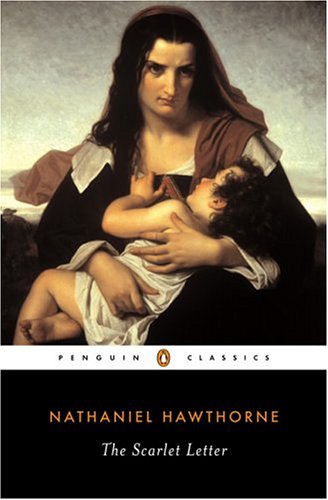
Ron’s #36: The Scarlet Letter by Nathaniel Hawthorne

I put my goal to read Moby Dick on hold in order to read The Scarlet Letter as I prepare to teach it with my AP Language & Composition class. As Hawthorne and Melville were friends, I didn’t think that Melville would mind.

While I read and taught The Scarlet Letter before, I never had the appreciation for it as I did in this reading. I was captivated by the story, but the language and style of its writing was preeminent for me. Hawthorne crafts a beautifully written story that tells the familiar tale of Hester Prynne’s public shame and Reverend Arthur Dimmesdale’s private tormented guilt after an adulterous affair set in the backdrop of Puritan Boston. The story is simple, as Hester faces a judgmental crowd in the town, and Dimmesdale suffers from a burning conscience as he does not admit to his sin. One man, Roger Chillingworth—Hester’s husband—knows the secret and is bent on revenge against them both.

While The Scarlet Letter is often used to criticize and demonize the Puritan era, it rather shows the importance of what the consequences of sin lead to within our hearts. The public consequences are temporary, but the private consequences are far longer reaching as the “Hound of Heaven” chases after us to confess and repent. While Hawthorne does not condemn adultery as a sin, we see the destruction causes by infidelity with the Prynne family. Hester Prynne is indeed a model of feminine strength and virtue in accepting responsibility and guilt, but she also provides us a picture of the results of our sin and the need for redemption in a Savior.

The book begins with this excellent line, showing the coldness of the scene and the tone of the entire novel:

 A throng of bearded men, in sad-colored garments and gray, steeple-crowned hats, intermixed with women, some wearing hoods, and others bareheaded, was assembled in front of a wooden edifice, the door of which was heavily timbered with oak, and studded with iron spikes.

In our first picture of Hester, Hawthorne contrasts the ugliness of sin with the beauty of the woman:

 On the breast of her gown, in fine red cloth, surrounded with an elaborate embroidery and fantastic flourishes of gold thread, appeared the letter A. It was so artistically done, and with so much fertility and gorgeous luxuriance of fancy, that it had all the effect of a last and fitting decoration to the apparel which she wore; and which was of a splendor in accordance with the taste of the age, but greatly beyond what was allowed by the sumptuary regulations of the colony.

If you are looking to read novels that you should have read in high school but didn’t, I heartily recommend starting with this one.


 

JRF's #28 - The Cost of Discipleship by Dietrich Bonhoeffer

I have been listening to this audio book in my car on the way to and from work for the last six months or so.  Here is what I have learned:

- Dietrich Bonhoeffer was incredibly smart

- Dietrich Bonhoeffer was incredibly passionate about Christ

- I am not a audial learner

Not only did I find that I retain far less information by hearing it than by reading it (and making notes), but the 5 minute drive to and from work is not enough to saturate in the information.  This is a book that requires much mental chewing and spiritual digestion.  Bonhoeffer is very philosophical in his approach and this left me lost very often and a few times wondering if his philosophical conclusions were scripturally solid, although I wasn't able to keep pace with his reasoning most of the time so to question the conclusion without following the path may not be wise.

The few nuggets I did retain however made it all worthwhile.  The large portion of the book that is an exposition of the Sermon on the Mount I appreciated as Bonhoeffer forces the reader to take seriously the demands of Jesus to live out the values of His Kingdom.  Bonhoeffer stresses the "spontaneous obedience" that Christ expects of His followers.  We are not to question, debate, or ignore Christ's commands.  We are to obey them immediately.  Simple and clear, but so often I (and most of us) quickly find excuses not to immediately and literally obey Christ's clear commands - and yet still have the nerve to call myself a faithful disciple.

In many aspects the book reminded me of David Platt's Radical - except for German PH.D students.

For these reasons and more (especially the extraordinary life of Bonhoeffer)  I am compelled to dig into the hard copy in the future.