Ron’s #47: Spectacular Sins by John Piper

Have you ever asked God why he allows evil in the world? Why is Satan allowed to reign?

For those familiar with John Piper’s writing, you already know that all of his books explore how God does all things for his glory. This book takes that same theme to look how even the evil in the world is used to glorify Jesus Christ in some way, without God being culpable for that sin. God is so big and glorious that all things work for good in some mysterious way.

Piper mainly looks at key evils in the Bible: Satan’s fall, Adam’s disobedience, the tower of Babel, Joseph’s casting off by his brothers into slavery, Israel asking for an earthly king, Satan entering Judas, and the murder of Jesus. As a commentary, this book is an excellent tool at showing unity of Scripture, and pointing all things to Jesus.

I do feel that the book stopped too soon, as I would have liked to see how Piper would handle how the sins and evils of the world today are “spectacular sins.” He alludes to it in his excellent introduction (in my opinion, the strongest section of the book). Our church services today pamper us away from pain and suffering, as if those cannot be used of God for His glory.

Consider this book as a powerful beginning to this difficult and important problem.
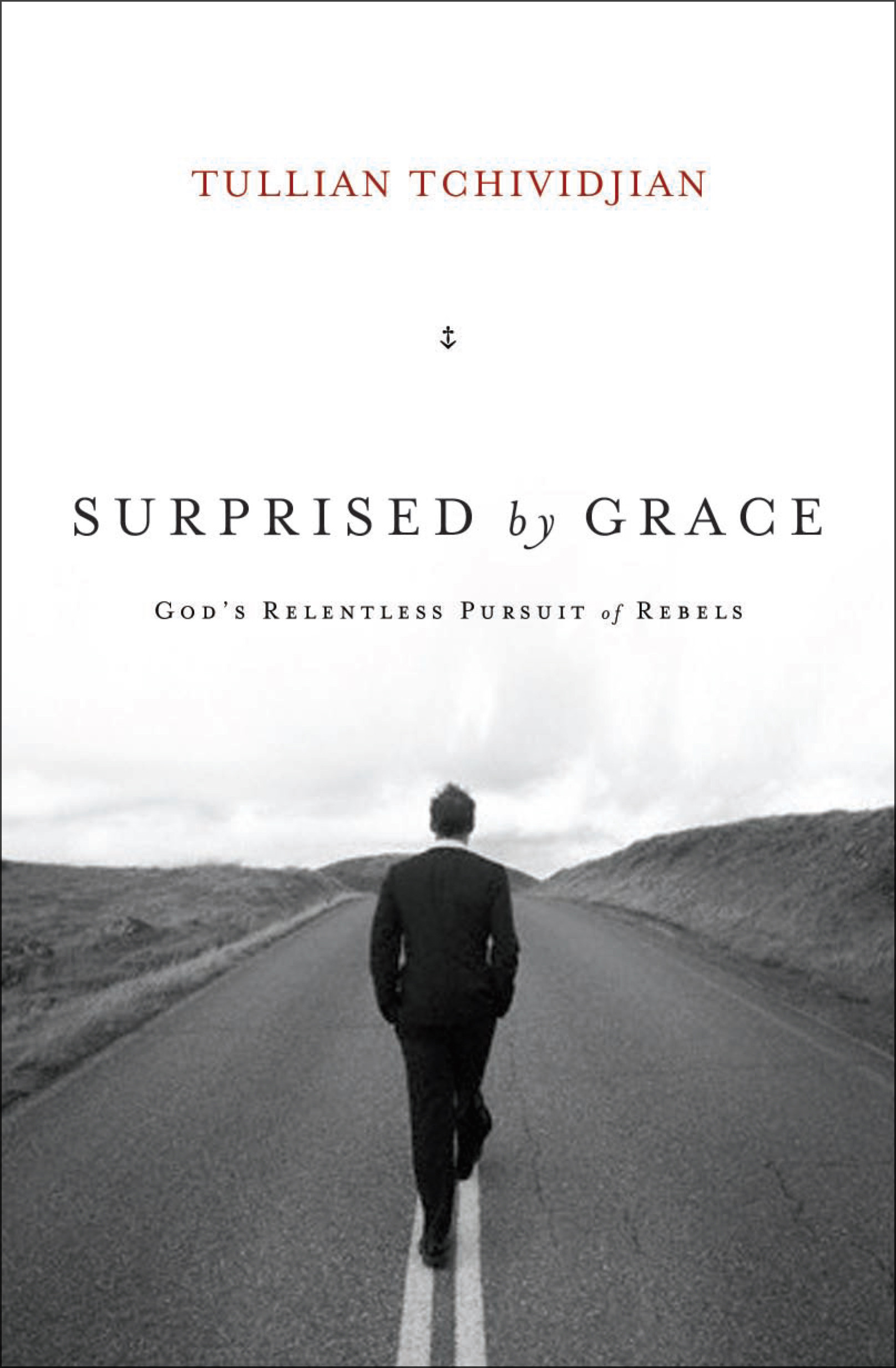
Mark's #49 - Surprised by Grace: God's Relentless Pursuit of Rebels by Tullian Tchividjian

Our sin cannot go too far where God's grace can't go farther still.  The gospel is not merely a ticket to get into heaven, the gospel is the very breath of life for all of God's people every day.  We don't check the gospel box and then move on to the deeper things of God.  Rather, we move deeper into our understanding and experience of the gospel and God's grace with each step of Christian maturity.

This is a book about the gospel of grace as found in the message and story of the Old Testament book of Jonah.  Like many pastors, Tullian preached a sermon series and turned it into a book, and a good one at that.

The version of the story most of us think about when we think about Jonah is the one that has been repackaged and watered-down for the consumption of children.  As such, we miss the amazing evidences of God's grace throughout the story and by application in our own lives as well.

As I preach a series through the Minor Prophets, my focus has been to show where Christ is present throughout each book.  At first glance, this can be difficult. However, Jesus claimed that all of the Old Testament testified about Him (Jn. 5:39).  Augustine's words are indeed true when he said, "The New Testament is contained in the Old Testament, and the Old Testament is explained in the New Testament."  In this book, Tchividjian does on a micro level (scene by scene) what I'm trying to do on a macro level (book by book) - show Christ and His gospel as found in the Old Testament.

If you read Jonah, one of the things that strike you is that the story does not follow an expected path.  The prophet of God is the rebel.  Pagan sailors repent and make sacrifices and vows to the LORD.  A fish is appointed to swallow the prophet to preserve his life for three days.  The prophet goes where's he's told, preaches an awful sermon, and a very large, proud, and wicked city repents.  This makes the self-centered prophet angry and wishing for death. God continues to give grace throughout. Then, just as we're about to see what is to come of the prophet, the book ends and leaves us hanging. Why is that?  Because I believe God is not only pursuing the pagan nations, and his wayward prophet, but He's pursuing us, the readers,  by his suprising grace.

If you want to dig deeper into the surprising grace of God, the book of Jonah and this book would be a great place to spend some time.

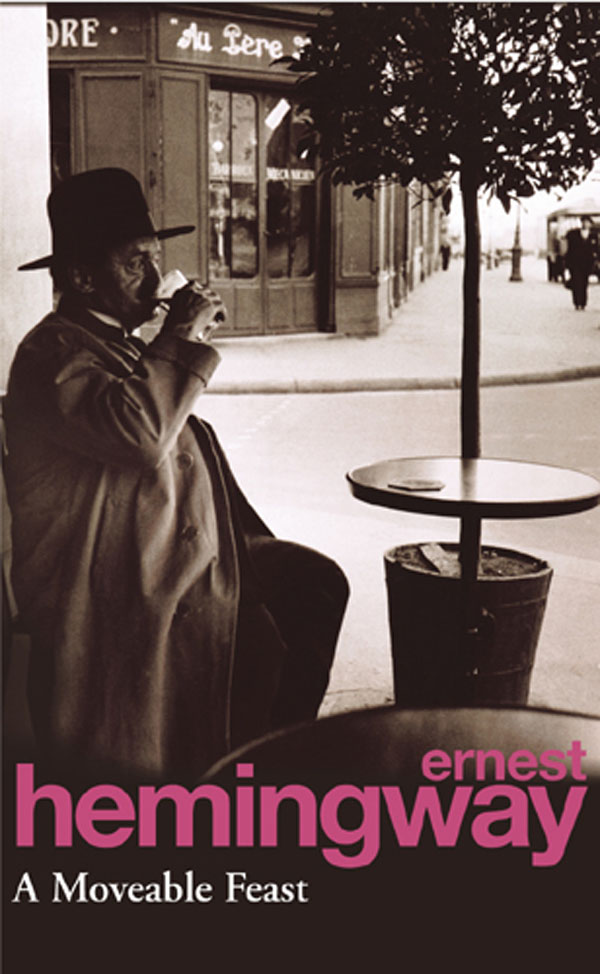
JRF's #43 - A Moveable Feast by Ernest Hemmingway

I bought this book at one of my favorite bookstores in the world, Shakespeare and Company, in Paris a few years ago.  It sat on my bookshelf until this year when after watching one of my favorite movies of the year, Midnight in Paris, I was inspired to pick this book back up.

In A Moveable Feast Hemingway recounts his early days as a writer in Paris.  In his unique and vivid writing style he recounts walks in the park with Getrude Stein, his faithful friend Ezra Pound, the eccentricities of well-known artists and poets, drunken road-trips with F. Scott Fitzgerald, and even taking Fitzgerald to the Louvre to look at naked statues to boost Scott's confidence in his manhood.  While much of the ancedotes Hemmingway relays are hilarious, some are also heartwrenching, such as his account of falling into an affair during his first marriage.

For a Paris-o-phile and Hemingway-o-phile such as myself, this book was a fun read.  If you liked Midnight in Paris, you will enjoy this book which must have provided much of the source material for the film.

"There is never any ending to Paris and the memory of each person who has lived in it differs from that of any other.  We always returned to it no matter who we were or how it was changed or with what difficulties, or ease, it could be reached.  Paris was always worth it and you received return for whatever you brought to it.  But his is how Paris was in the early days when we were very poor and very happy."

Ron’s #46: Candide by Voltaire


Yes, this is a rereading of a book for school, but like most books, I got more out of it on a second reading. I love this short novel of a young man’s journey through the world of sin, evil, and darkness to test preconceived theological and philosophical notions that this world is the “best of all possible worlds.”


Candide is Voltaire’s indictment on an active, benevolent God, but he ignores the important fact that without an absolute standard of what is good, how can we call anything evil? Why are all the wars, rapes, thieving, murder, and vengeance Candide experiences considered evil if there is no measuring stick to define it against an absolute good? In the words of C. S. Lewis, how can we call a line crooked without any notion of a straight line? Contrary to Voltaire’s findings, the evil and wickedness in Candide’s world point to absolutes of goodness, fairness, and honesty. If there is no God in this world, how does the atheist explain the evil? To what standard can he call rape and murder wrong if there is no ultimate goodness?


My last year’s review of Candide is found here.


Ron’s #45: Note to Self by Joe Thorn

I first heard an interview with author Joe Thorne on my favorite podcast, The White Horse Inn. Thorne talked about the concept of preaching the gospel to yourself, and wrote this book to show how we can remind ourselves what Christ has done on our behalf.

This short book is more of a devotional, with quick, two-page chapters reminding us of some aspect of the Christian life. The three sections are “The Gospel and God,” “The Gospel and Others,” and “The Gospel and You.” Chapters include:

Chapter 8: Jesus is Enough

Chapter 9: God Does Not Answer to You

Chapter 10: Be Humble in Your Theology

Chapter 16: Love Your Wife

Chapter 34: You are Proud

Chapter 35: Stop Complaining

Chapter 41: Be Careful in Your Theology

Chapter 44: Suffer Well

While I usually do not read devotional books, Note to Self  is a good one to help remind us that we are loved and were bought at a price through the blood of Christ.

JRF's #42 - Revelation 20 and the Millennial Debate by Matthew Weymeyer

This little book, written by a fellow classmate at The Master's Seminary, provides a great help in breaking down and understanding the pre-millenial interpretation of Revelation 20.  It answered a lot of questions for me, sparked some new ones, and overall provided a strong case for seeing the events of Revelation 20 as still future.

The book is strongest when Weymeyer is interacting with Amillenial and Postmillenial view points, weighing them against the text of Scripture.  Unfortunately this interaction tapers out as the book goes on, giving it a less powerful conclusion than I believe could have been achieved.

Eschatology is probably the weakest area of my theology and I have been negligent in my study of this important yet difficult and divisive topic.  Hopefully, this book will serve to jumpstart my studies and wet my appetite for further digging.